

World AIDS Day is an annual event in which people from all over the world, including those from the LGBTQ community, come together to remember those who have lost their lives due to HIV and AIDS.
World AIDS Day is also a day in which people strive to combat the stigma and hostility attached to those living with the virus, who are often discriminated and victimised as a result of their illness.
HIV was first diagnosed in 1981, and according to the World Health Organisation (WHO), an estimated 39 million people were living with HIV by the end of 2022. Moreover, during the initial rise of the HIV and AIDS pandemic in the early 1980’s, the pop sensation Freddie Mercury of the notable band Queen, was displaying the early warning signs of being infected with HIV.
It is believed that Freddie Mercury was infected with HIV when he had an unprotected sexual encounter with a person who already had the virus. Meanwhile, at this time, his band Queen was to appear on the program Saturday Night Live in the US, on one of their final public appearances. However, according to the authors of ‘Somebody to Love: The Life, Death, and Legacy of Freddie Mercury’ Mark Longthorne and Matt Richards, Mercury had secretly visited a doctor in New York City, after concerns of a white lesion on his tongue (which may well have been a ‘hairy leukoplakia’) and while those within Freddie Mercury’s inner circle repeatedly denied that Freddie Mercury had AIDS. It was not until Mercury’s partner Jim Hutton later confirmed in 1987 that Freddie Mercury had indeed been diagnosed with AIDS. A few years later, in 1991, Mercury invited the manager of his band, Jim Beach, to a meeting at his home in Kensington, London. The meeting was to discuss Freddie’s ongoing health challenges with AIDS, and that he was ready to make a public statement which was to be released the following day. However, on the same day that the public statement was published, Freddie Mercury sadly died on the 24th November 1991 at the age of 45, from bronchial pneumonia as a result of AIDS.
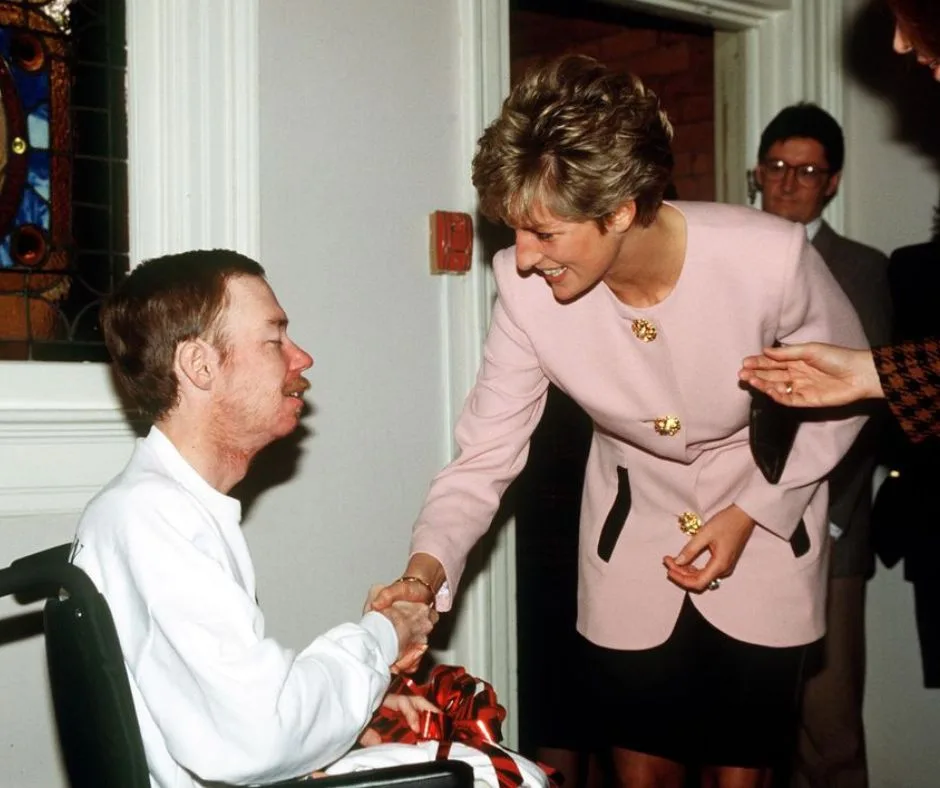

Meanwhile, at the peak of the AIDS pandemic in April 1987, Princess Diana used her celebrity status as a means to change the attitudes of others regarding HIV and AIDS. Princess Diana also assisted in the opening of a unit at London’s Middlesex Hospital, that would specialise in the treatment and care of those living with the virus. More notably, on one occasion when the Princess visited the unit, she was quoted as saying “HIV does not make people to be dangerous to know. You can shake their hands and give them a hug. Heaven knows they need it. What’s more, you can share their homes, their workplaces, and their playgrounds and toys”. Princess Diana would also frequent the Lighthouse in London, in an attempt to ensure those living with the virus were not alone or forgotten. Then, in 1997, the same year in which the Princess died, she met with Nelson Mandela while on a tour of South Africa. There, she met with many people who were living with HIV and AIDS. Meanwhile, after the tragic death of Princess Diana in Paris, Nelson Mandela said of her “When she sat on the bed of a man with HIV/AIDS and held his hand, she transformed public attitudes and improved the life chances of such people”.
HIV (human immunodeficiency virus) and AIDS (acquired immune deficiency syndrome) can have a detrimental impact of a person’s quality of life. Moreover, children can contract HIV when in the womb of their mother who is infected with the virus. However, while AIDS cannot be passed on to another person, HIV can, and is commonly passed on through the exchange of bodily fluids such as blood, semen, and vaginal fluids. However, the treatment for HIV and AIDS called antiretroviral therapy (ART), includes the person taking daily medication for the rest of their life and one that helps to reduce symptoms of HIV and AIDS.