

Religions That Do Not Celebrate Christmas
Every December, billions of people globally get ready for Christmas by decorating their homes, exchanging gifts, and attending church services. However, not everyone celebrates this Christian holiday. In fact, several major world religions do not observe Christmas, each with their own significant reasons for this choice.
Judaism is a prominent religion that does not observe Christmas.
This is primarily because Jews do not recognize Jesus as the Messiah, which is a central tenet of their faith. Instead, they celebrate their own holidays, such as Hanukkah, which may occasionally coincide with the Christmas season.
Additionally, Jewish traditions and teachings are rooted in the Torah rather than the New Testament, further distinguishing their practices from those of Christianity.

Muslims do not celebrate Christmas because it conflicts with fundamental Islamic beliefs. In Islam, Jesus, known as Isa in Arabic, is regarded as a prophet rather than the son of God, which contradicts the concept of monotheism (Tawhid) central to the faith. Instead, Muslims observe their own significant holidays, such as Eid al-Fitr and Eid al-Adha. However, many Muslims may show respect for Christmas and participate in secular festivities with friends or colleagues, engaging in the celebrations without any religious connotation.
Hinduism does not traditionally recognise Christmas as a religious holiday, although in some cultures, particularly in India, it is seen as a secular or social occasion. The reasons for this include the existence of distinct Hindu festivals like Diwali, Holi, and Navratri, as well as the fact that Jesus is not regarded as a divine figure within Hindu beliefs. Instead, the spiritual emphasis is placed on deities such as Vishnu, Shiva, and Devi. Nevertheless, in diverse communities, some Hindus may choose to participate in Christmas festivities by decorating or exchanging gifts, driven by cultural curiosity.
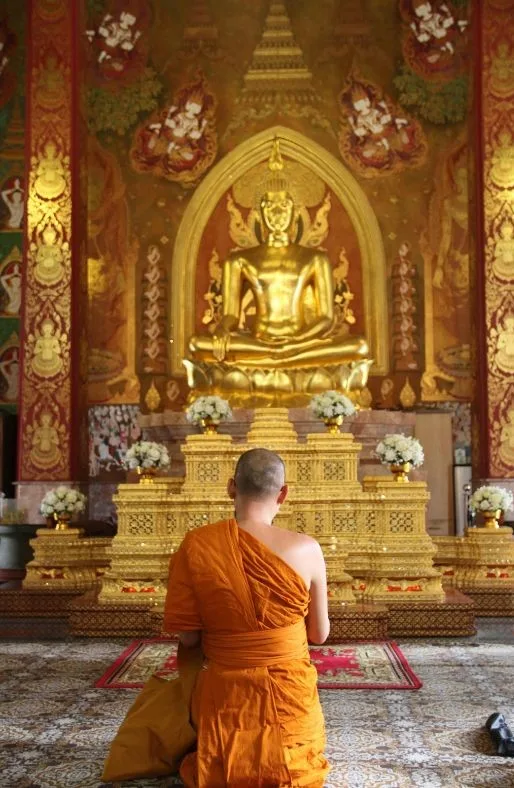
Buddhists, particularly in Asian nations, generally do not observe Christmas in a religious context.
This is primarily because Christmas does not align with Buddhist teachings or traditions. Instead, the focus for Buddhists is on concepts like mindfulness and enlightenment, as well as celebrating significant events such as Vesak, which marks the Buddha’s birthday.
While Jesus is often regarded as a wise teacher, he is not viewed as a divine figure within Buddhism.
Nonetheless, some contemporary Buddhists may partake in Christmas celebrations in a secular and communal manner, enjoying the festive spirit without religious connotations.
My perspective on Christmas by Asma
As a Muslim myself, along with many others, we appreciate Christmas and often take part in the celebrations with friends and colleagues. We enjoy the festive atmosphere and the joy of the season, focusing on community and connection rather than religious aspects. This participation emphasises the value of friendship and shared moments during the holiday season.
As a child, Christmas was a magical time filled with joy and excitement. I eagerly participated in various Christmas concerts and cherished the festive parties with my family and friends, where we exchanged gifts with close friends from the neighbourhood and school. We often attended Christmas pantomimes and engaged in other holiday activities, creating lasting memories that I still treasure today.
Although, I don’t celebrate Christmas, my family still comes together during the holiday season. We enjoy watching Christmas movies, feasting on delicious food, and reminiscing about cherished memories. Additionally, we take the opportunity to teach our nieces and nephews about the importance of Equality, Diversity, and tolerance for all faiths and religions.